
Wake Juvenile Release Access
Wake Juvenile Detention Center is a state juvenile detention facility associated with North Carolina's Division of Juvenile Justice and Delinquency Prevention. It is not an adult county jail and not an NCDAC adult prison. Public jail rosters are intentionally the wrong place to look for a young person. The correct path depends on the caller's authority and connection to the juvenile case, not on whether an adult database produces a match.
A parent, legal guardian, lawyer, or another party recognized by the juvenile system should use the case-specific Juvenile Justice or court channel already provided in notices and orders. Staff must determine what may be discussed and with whom. A general member of the public should not expect confirmation that a particular juvenile is held, released, transferred, or involved in a proceeding. This boundary prevents the creation of a public juvenile profile from fragments that were never intended for public circulation.
Juvenile Center Contact Route
The reviewed Wake research identifies the operator and the confidential route but does not supply a public facility street address, release desk number, routine release hour, or visitor schedule. Those details should not be guessed. An authorized person should rely on current Juvenile Justice paperwork, counsel, or the juvenile court channel for the correct facility contact and case-specific directions.
Wake Juvenile Detention Center
North Carolina Division of Juvenile Justice and Delinquency Prevention
Access: Authorized Juvenile Justice or juvenile court contact
Status: Confidential juvenile information
The North Carolina Judicial Branch's Wake County page is the verified public starting point for court locations, calendars, forms, and local links.
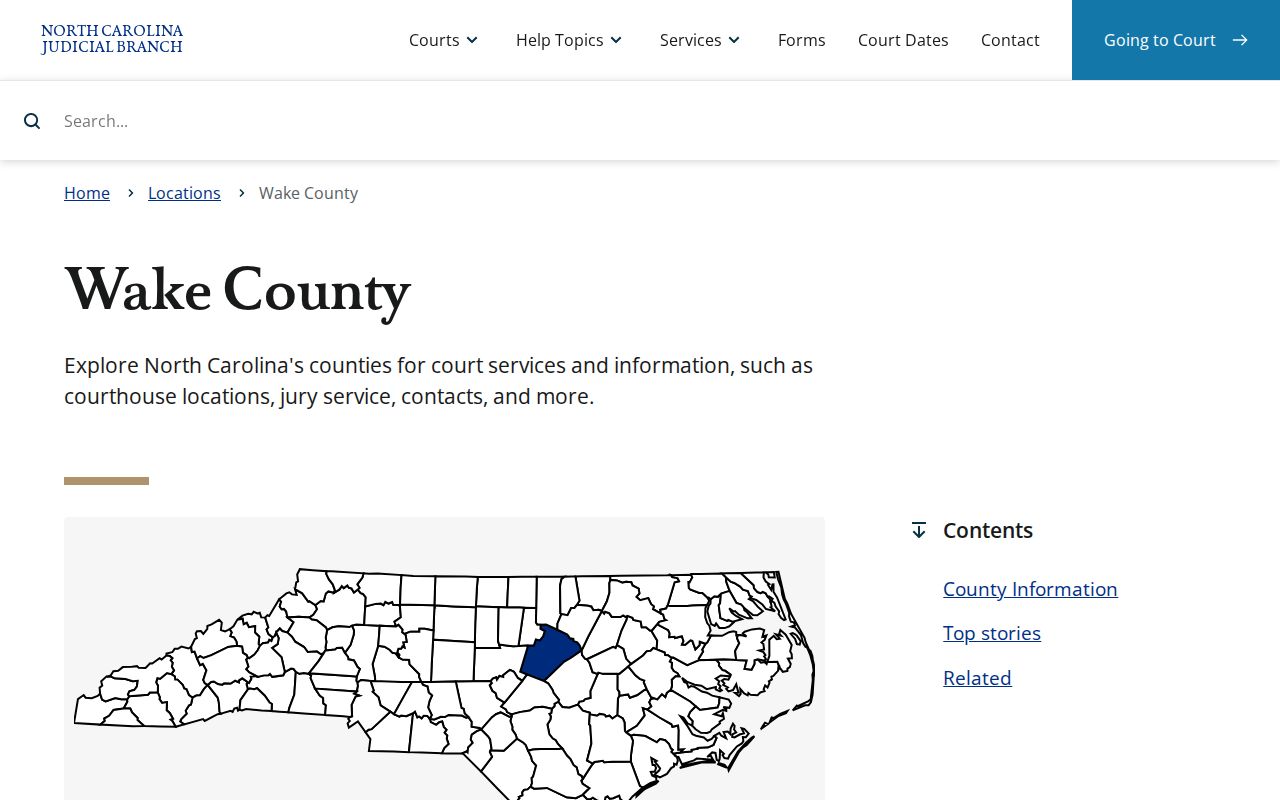
The public court page helps locate the proper office. It does not make juvenile case details public or authorize disclosure to someone outside the case.
Avoid Adult Juvenile Searches
Wake's adult detention inquiry serves adult county bookings and custody leads. NCDAC's offender system serves adult state corrections and supervision records. Public recent-release pages also address adult custody channels. None should be used to infer a juvenile's placement or release. Similar names, lack of results, and unrelated adult records can all produce harmful errors.
| Channel | Proper population | Juvenile conclusion |
|---|---|---|
| Wake adult jail inquiry | Adult county booking or custody leads | No result proves nothing |
| NCDAC adult offender history | Adult state corrections and supervision | Not a juvenile detention source |
| Adult recent-release material | Adult release research where available | Does not document juvenile release |
| Authorized Juvenile Justice contact | Confidential juvenile case information | Correct route after authority is verified |
| Juvenile court or counsel | Case orders, duties, and lawful guidance | Correct companion route for an authorized party |
Avoid building a timeline from social posts, cached pages, or third-party claims. Even an accurate detail can be confidential, incomplete, or stripped of context. Release may carry private placement, caregiver, transport, or court conditions that should not be exposed. The responsible action is to preserve the information within the authorized relationship.
Juvenile Release Versus Transfer
A young person leaving one facility has not necessarily been released to unrestricted community life. The movement may involve a transfer, a placement decision, a return to an authorized caregiver, or another action under juvenile court and Juvenile Justice authority. The exact vocabulary and next steps come from the responsible office. Public adult definitions should not be forced onto a confidential juvenile event.
- Authorized release information
- Case-specific status or instructions shared with a person whose identity and role have been accepted by the responsible office.
- Transfer
- A movement to another custodial or approved setting. Departure from one building does not establish freedom from all custody or supervision.
- Court direction
- An instruction or order within the juvenile proceeding that may govern placement, timing, contact, or later appearances.
- Confidential record
- Information protected from routine public access and handled only through the appropriate juvenile authority.
Ask the authorized contact what the movement means, who may receive the juvenile, and which instructions must be followed. Do not seek the address of a private placement or disclose a pickup plan. Safety and confidentiality take priority over satisfying a public status question.
Note: A facility departure may be a confidential transfer, so only the responsible juvenile authority can define the event for an authorized person.
Wake Juvenile Court Boundaries
North Carolina court access for ordinary public adult cases includes online tools, clerk terminals, and paper files. That general access model should not be carried over to juvenile matters. Juvenile proceedings operate under a different confidentiality system. A public court calendar or a missing online case does not confirm that a juvenile was never detained, has been released, or has no pending matter.
An authorized lawyer, parent, guardian, or other recognized participant should request guidance within the case. The office may limit the response, require proof of authority, or direct the requester to counsel. Those safeguards are not a data error. They are part of handling information about a young person whose case is not open to the same public inspection as an adult criminal case.
Public court navigation → correct juvenile office → identity and authority review → case-specific response. Stop if the office cannot verify authority. Do not redirect the search into adult arrest, jail, corrections, or notification systems.
Hammond Expansion Is Adult Custody
Wake County's reported detention expansion concerns the adult Hammond Road jail, not Wake Juvenile Detention Center. The adult complex was phased under a 1999 master plan, with earlier phases completed in 2005 and 2012. Current planning material describes a roughly 120,000-square-foot third phase and about 448 maximum-security beds. February 2026 documents treated later construction and occupancy dates as projections.
Those plans cannot be used to infer a juvenile facility transfer, release-policy change, capacity change, or individual status. Even the adult county figures belong only to the adult detention system. The boundary is explicit: public news about Hammond Road does not open juvenile records or move juvenile cases into an adult search route.
Protect Juvenile Release Details
Use the minimum information needed to reach the authorized office. Share identifying details only through the secure process that office directs. Keep case numbers, placement information, release timing, caregiver details, and pickup plans out of public posts and broad email chains. If a caller is not entitled to the information, staff may provide no confirmation at all.
When two sources seem to conflict, do not publish a theory. Return to counsel, the assigned Juvenile Justice contact, or the juvenile court office and ask how the authorized record should be read. Confidentiality also means that a public-facing correction may never appear. The absence of an online explanation is not evidence that the official process failed or that a release occurred.
- Use a case-specific official contact.
- Verify identity and legal authority.
- Request only necessary custody or release guidance.
- Keep placement and pickup details private.
- Follow counsel and court instructions when records conflict.
Note: Public curiosity does not create access to juvenile custody data, and a responsible search ends when lawful authority cannot be established.