
Wake County 72-Hour Release Finding
The Wake County Sheriff does not publish a named 72-hour released-inmate feed, three-day archive, or weekend release view. The official channel sweep found no verified URL, update cadence, retention term, photo indicator, or public field specification for such a product. The Wake arrest and booking-photo interface answers a different question. It cannot establish that everyone absent from its result set left custody.
A 72-hour check is still possible, but it must be assembled from the records for a stated period. Identify the start and end date and time. Then ask the Sheriff for existing custody events within that range. The result should be checked against court orders and any receiving-custodian record. This approach is especially useful when the exact release day is uncertain.
Check Wake County Three-Day Releases
Begin with the facility that last held the person. Wake's adult local detention system includes the Hammond Road Detention Center and the downtown John H. Baker Jr. Public Safety Center. Movement between those buildings is not release. A useful three-day review follows the custody path rather than searching the same name on unrelated systems.
- Set an exact 72-hour period with both start and end times, and note when the search begins.
- Collect the person's full name, birth date, aliases, booking or CCBI number, case number, and last known facility.
- Call Hammond Road Detention at 919-773-7930 or the Public Safety Center at 919-856-5952.
- Ask whether the existing event records community release, internal movement, or transfer to another custodian.
- Review North Carolina eCourts for bond, dismissal, judgment, sentence, or another order within the same period.
- Use NC SAVAN for a person-specific event lead, and use NCDAC OPI only when state incarceration or supervision may apply.
- If the result remains unclear, submit a county records request that names the date range and exact fields sought.
For only the current day, the Wake County 24-hour release guide uses a tighter same-day workflow. Do not shorten a three-day request to “recent releases.” Precise dates help the records custodian locate the actual event without creating a custom rolling feed.
Wake Weekend Release Review
A three-day range is most helpful when a weekend or holiday disrupts an ordinary calendar-based check. A release late on one day may be sought on the next business day. Court action and jail processing also occur on different records. The Wake court entry can explain the authority for release, while only the Sheriff's custody event fixes the physical exit time.
There is no researched Wake promise about a fixed release hour, daily posting time, or processing deadline. Avoid assuming that a morning court order produced an immediate exit. A second case, bond condition, detainer, transport order, or administrative step may remain. Likewise, a person can leave one Wake building yet remain in custody at the other. The 72-hour span helps collect events across days, but it cannot resolve their meaning without the destination field.
If the exact period is Monday morning through Thursday morning, say so. A phrase such as “over the weekend” is less precise and may omit a Friday-night or early-Monday event. Date and time boundaries make the response easier to interpret.
Wake County 72-Hour Record Fields
No official Wake three-day table exists to copy. These are the existing release-record fields that should be named in a focused request. Together, they can show who left Wake custody, when the event occurred, and whether the person entered the community or another agency's control.
| Field | Why it matters across three days |
|---|---|
| Full name and aliases | Helps match the right person across jail, court, and notification sources. |
| Booking or CCBI number | Separates multiple bookings and similarly named people. |
| Admission date and time | Connects the release to the correct custody period. |
| Actual release date and time | Places the event inside or outside the defined 72-hour range. |
| Releasing facility | Distinguishes the downtown and Hammond Road Wake locations. |
| Authority or release type | May identify bond, court release, dismissal, time served, sentence completion, or transfer. |
| Destination or receiving agency | Shows whether the person entered the community or remained in custody. |
| Charge and case link | Points to the court file that explains the legal event. |
Ask for the existing booking/release sheet or custody-event log. Wake need not produce a new multi-day report. Juvenile, personal, security, investigative, sealed, and expunged information may be withheld or redacted under the laws that govern the record.
Why Wake Release Data Can Vanish
Wake's arrest-data access is changing. The online arrest and mugshot product is scheduled to leave the web on August 17, 2026, with continuously updated arrest records expected at a desk inside the Public Safety Center. That planned change concerns proactive publication of arrest data. It does not mean the underlying custody event stopped existing, and it does not create a rolling release archive.
The policy was linked to automatic-expunction information that did not always reach the Bureau database. This can produce two opposite errors. A record may disappear for a reason unrelated to release, or a stale arrest image may remain after a qualifying court record has been removed. Neither result answers who left jail over three days.
The dated report on Wake's announced arrest-access change provides the local context.
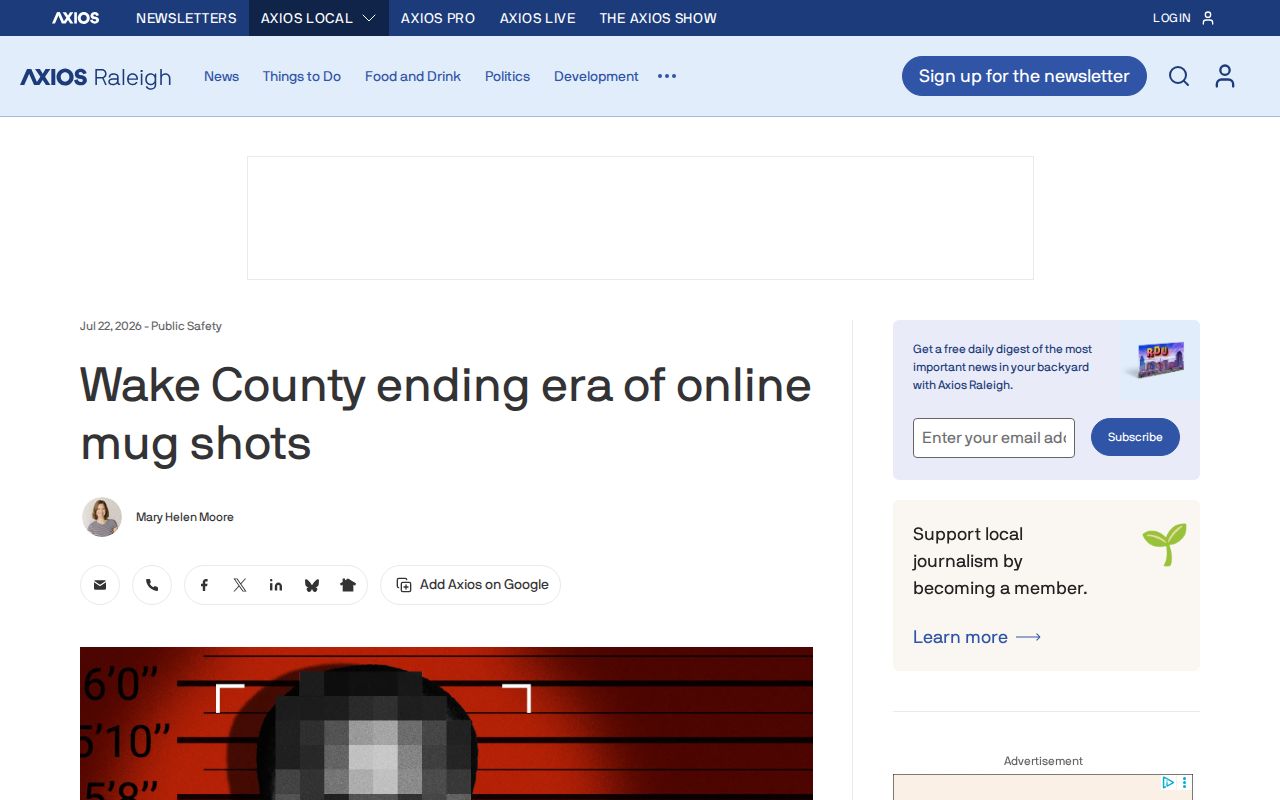
The image documents why a saved web result can age quickly and why a current Sheriff's response is still needed for a 72-hour custody question.
Request Wake Three-Day Release Records
Wake County uses a formal public-records portal. Direct the request to the Sheriff's Office or proper custodian. Provide the subject's full name, aliases, date of birth when safely submitted, booking or CCBI number, facility, case number, and exact 72-hour period. Ask for electronic delivery of the existing booking/release sheet or custody-event log.
Name the fields: admission and release times, release type or legal authority, releasing facility, destination or receiving agency, and charge or case link. This wording seeks existing data instead of asking the agency to compile a new weekend list. No fixed release-record fee or guaranteed turnaround was found. Large or sensitive requests can require review and redaction.
The separate Bureau certified-arrest service costs $15 per name and states a one-to-two-business-day mailing after receipt. It is an arrest-record service, not a certified release record. The Bureau's web page and its form show conflicting mailing ZIP codes, so verify the address at 919-856-6300 before mailing. Do not substitute that certified arrest search for the Sheriff's release event.
Wake State-Prison Release Window
NCDAC's Inmate Release Search is a real released-inmate source with Wake as a county choice. It searches state-prison releases by county, year, and month. It is not organized by a rolling three-day span, and “Wake” means the recorded state release county. It does not mean the person was released from a Wake County jail or confined at a Wake prison.
The official NCDAC Inmate Release Search can be used with Wake and the relevant month. Open each matching offender record. Read the incarceration history, actual movement date, inmate status, and supervision status before drawing a conclusion.
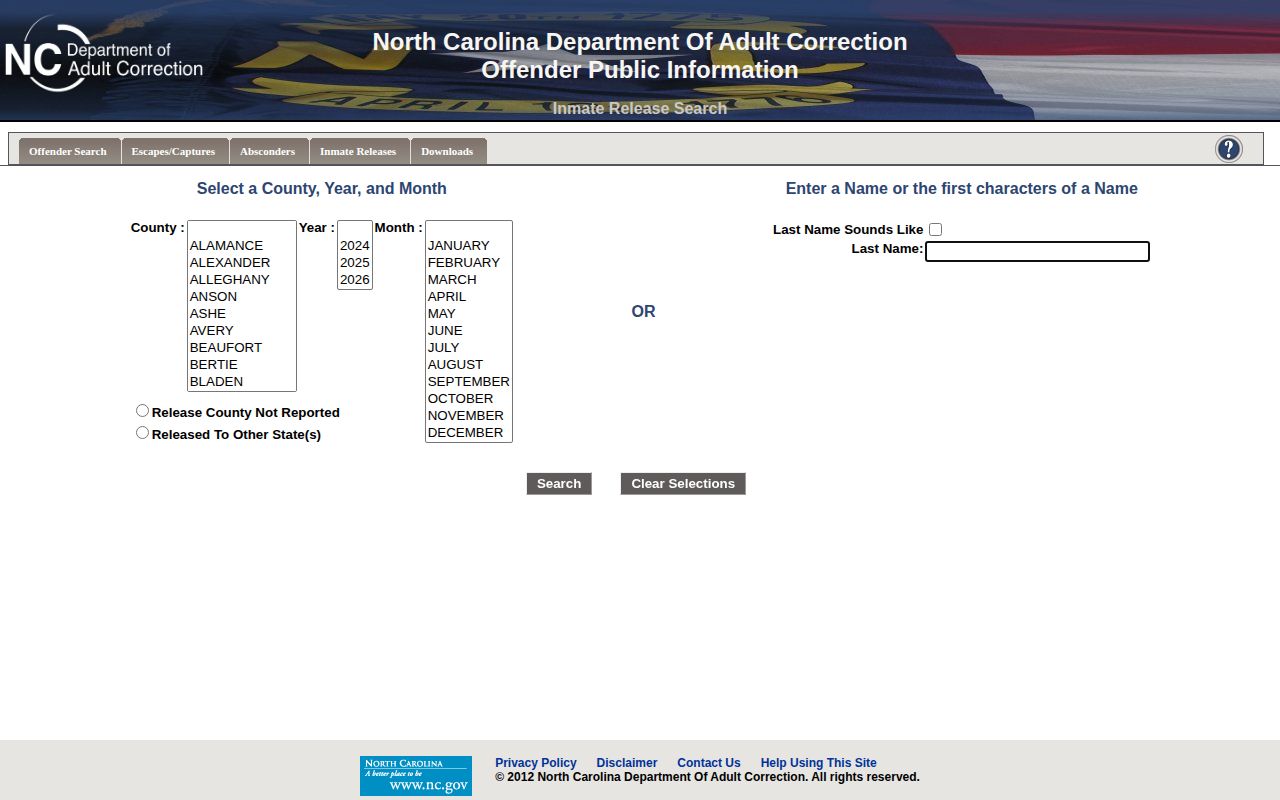
The state interface complements a Wake jail inquiry when the custody path points to NCDAC. It never replaces the county record for a local jail exit.
Read Wake Release Outcomes Correctly
A bond posting, written promise, court-ordered release, dismissal, time served, or local sentence completion can end Wake jail custody if no other hold remains. The criminal case may still be open. Probation or court-ordered pretrial monitoring may follow in the community. Those outcomes differ from a transfer to NCDAC, another county, USMS, or ICE, where confinement continues under another custodian.
NC SAVAN through VINELink can supply a person-specific custody-event lead. Data can lag, and some magistrate-level bond events may never enter the participating jail system. A transfer notice is not community release. Record the event time and contact the contributing jail or NCDAC for confirmation.
An inactive NCDAC result also needs context. It says the person is not currently active in the displayed inmate or supervision categories, but it does not name the last event by itself. Read the most recent incarceration summary and sentence history for an actual release, discharge, expiration, or other movement. The detail matters when a state record overlaps the same three-day period.
For a broader named-person review across local, state, federal, and court systems, use the Wake County release search guide. The key question remains unchanged across the three-day span: did the person enter the community, or did custody merely change hands?