
Central Prison Release Outcomes
Central Prison is a male NCDAC institution in Raleigh, not part of the Wake County Sheriff's detention system. A person may leave it for another prison, a medical placement, a classification destination, another custodian, post-release supervision, parole, or full discharge. Only the last group of movements represents release from incarceration into the community. Facility departure by itself is too broad.
OPI's current inmate and supervision status must be read with incarceration history, locations, and last movement. Active Inmate means the person remains in state prison. Active Probationer/Parolee can reflect community supervision, including post-release supervision. Inactive means no current active status in those categories, but the history still must identify the event. A projected date is a forecast, not an actual exit.
Verify a Central Prison Release
The official NCDAC Offender Public Information Search is the primary route. It includes state prison and supervision history back to 1972 and excludes county-jail data. Search by offender number when possible. If using a name, begin with a few strong identity fields and expand only as needed because combined filters can suppress a match.
- Open OPI and enter the OPUS offender number or identity details.
- Open the person-level detail, not just the search result.
- Read Inmate Status and Probation/Parole/Post Release Status.
- Review the most recent incarceration summary and admitting, current, and prior locations.
- Check last movement, movement date, sentence information, and any actual release date.
- Compare a projected date only as background.
- Use the state Inmate Release Search and NC SAVAN as secondary routes.
When Central Prison appears only as a past location, later history controls. The person may have transferred elsewhere long before release. Use the Wake County release search only to route across custodians; the state record remains decisive for this prison.
Central Prison Diagnostic Transfers
Central Prison serves as a major medical, mental-health, diagnostic, and admission center. Those roles increase the chance that a person appears there for evaluation, treatment, safekeeping, intake, or classification before moving elsewhere. Such a movement can look like a departure from the facility while the prison sentence continues without interruption.
Read location history in sequence. Note the date of admission to Central Prison, the next location, commitment county, sentence number, and last movement description. A move to another NCDAC facility keeps the Active Inmate status. A hospital or special placement also needs NCDAC confirmation rather than an assumption about custody. The destination field answers the practical question better than the disappearance of Central Prison from the current-location line.
This is why a facility telephone call alone is not a historical release search. Staff can route current questions, but OPI preserves the public statewide movement context.
Central Prison Records and Contact
Use the facility line for Central Prison information and NCDAC Public Records for existing public release fields. No researched public visiting or office hours should be inferred as records-desk hours.
Central Prison
1300 Western Boulevard
Raleigh, NC 27606
919-733-0800
North Carolina Department of Adult Correction
NCDAC Public Records
214 W. Jones Street
5201 Mail Service Center
Raleigh, NC 27699-5201
919-733-2126
Check OPI first. If more public context is needed, identify the OPUS number and request existing admission, movement, release, sentence, and supervision fields. NCDAC generally makes basic conviction, time served, sentence length, admission, and release dates public. Medical, security, investigative, and most detailed offender information remains confidential. Ask for electronic delivery and expect review or redaction when the request is broad.
About Central Prison
Central Prison is a male close, medium, and minimum-custody NCDAC institution with a published capacity of 1,104. Capacity is a facility characteristic, not a current count or annual release figure. Its statewide admission and specialized-care functions distinguish it from a routine local jail and from smaller minimum-custody prisons.
The official NCDAC institutions directory provides the facility-system context pictured below.
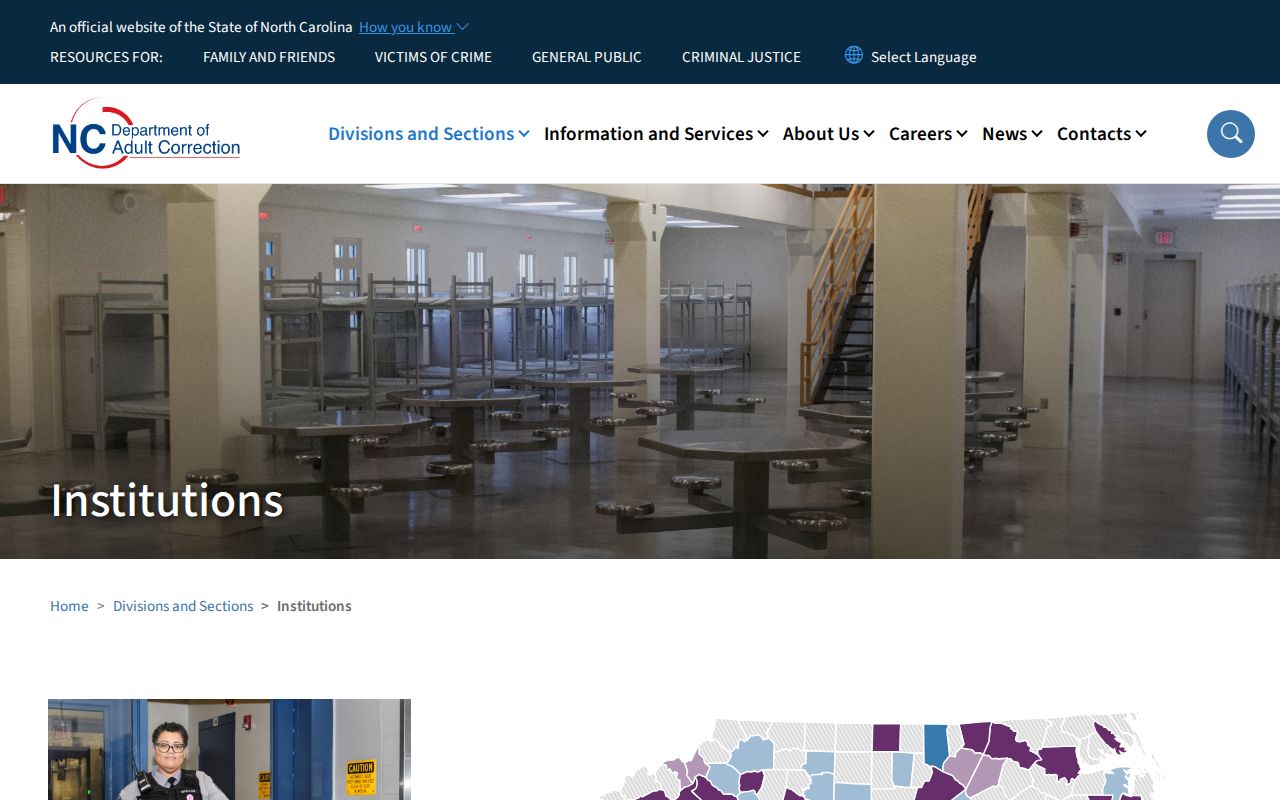
The directory confirms that Central Prison belongs to the statewide institution network. Its releases therefore belong in NCDAC records, not a Wake jail feed.
Central Prison Projected Dates
OPI may display the exact label Projected Release Date for an applicable sentence. The value can change with earned-time credits, disciplinary forfeiture, sentence modification, jail-credit correction, concurrent or consecutive sentence treatment, court action, and new holds. A diagnostic or medical transfer does not convert that projection into an actual release.
North Carolina structured felony sentencing requires service of the judicial minimum. Earned time may reduce the maximum but not below that minimum, so a generic 85-percent claim is wrong. Release from prison can begin post-release supervision rather than end the sentence. The current supervision field and actual movement are needed after the projected day passes. New detainers or receiving-custodian orders can also prevent a simple community exit.
Central Prison Release Search
NCDAC's monthly Inmate Release Search can be filtered by county, year, month, or last name. Wake as release county is not proof that Central Prison was the releasing institution. It can describe the recorded release destination county rather than prison location or conviction county. Each result must be opened.
The NCDAC Inmate Release Search is shown below.
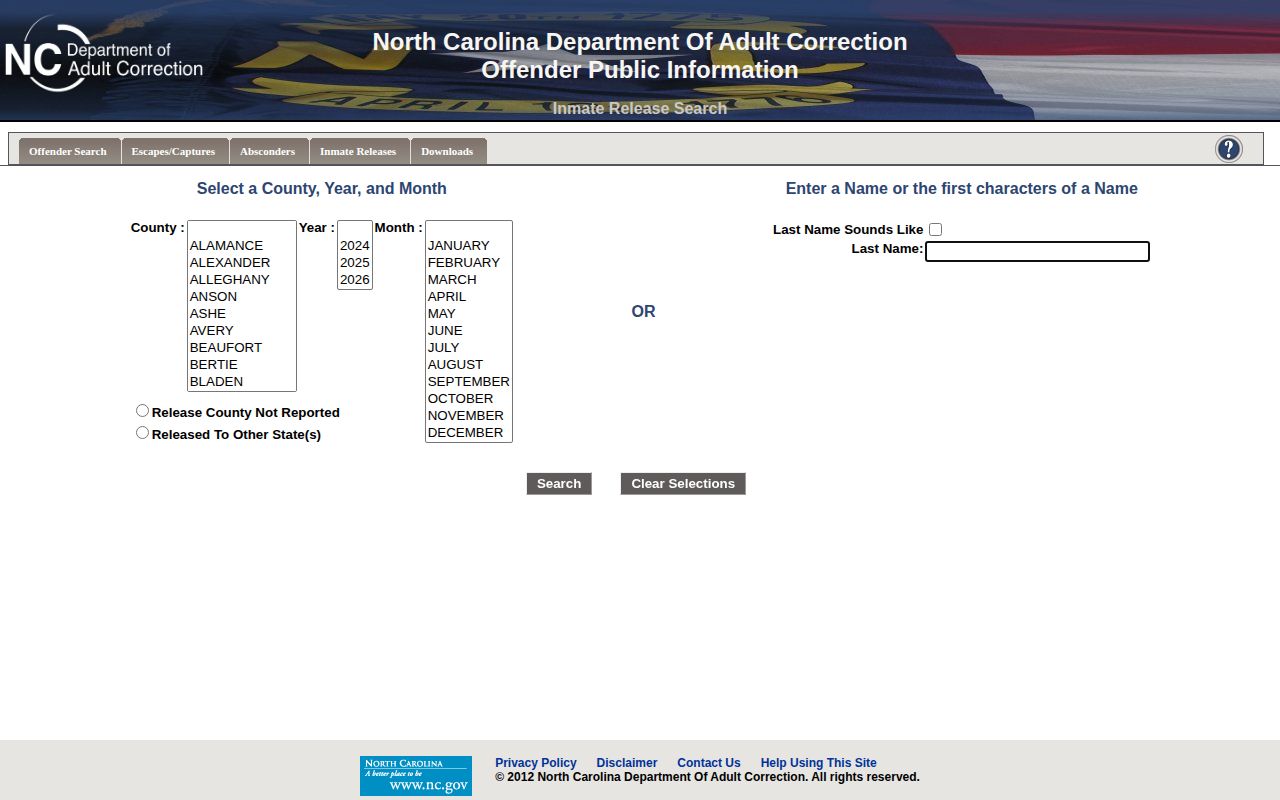
Use the list to discover a possible state release, then confirm that Central Prison appears in the relevant movement history and that the status supports community release.
Central Prison Release Notifications
NC SAVAN through VINELink offers person-specific custody and release alerts for North Carolina state prisoners. Search the correct person, read the contributing agency and identifier, then register for an available event and delivery method. Telephone alerts may use a four-digit PIN; other methods follow their own confirmation screen.
The direct NC SAVAN person search is the official notification route shown here.
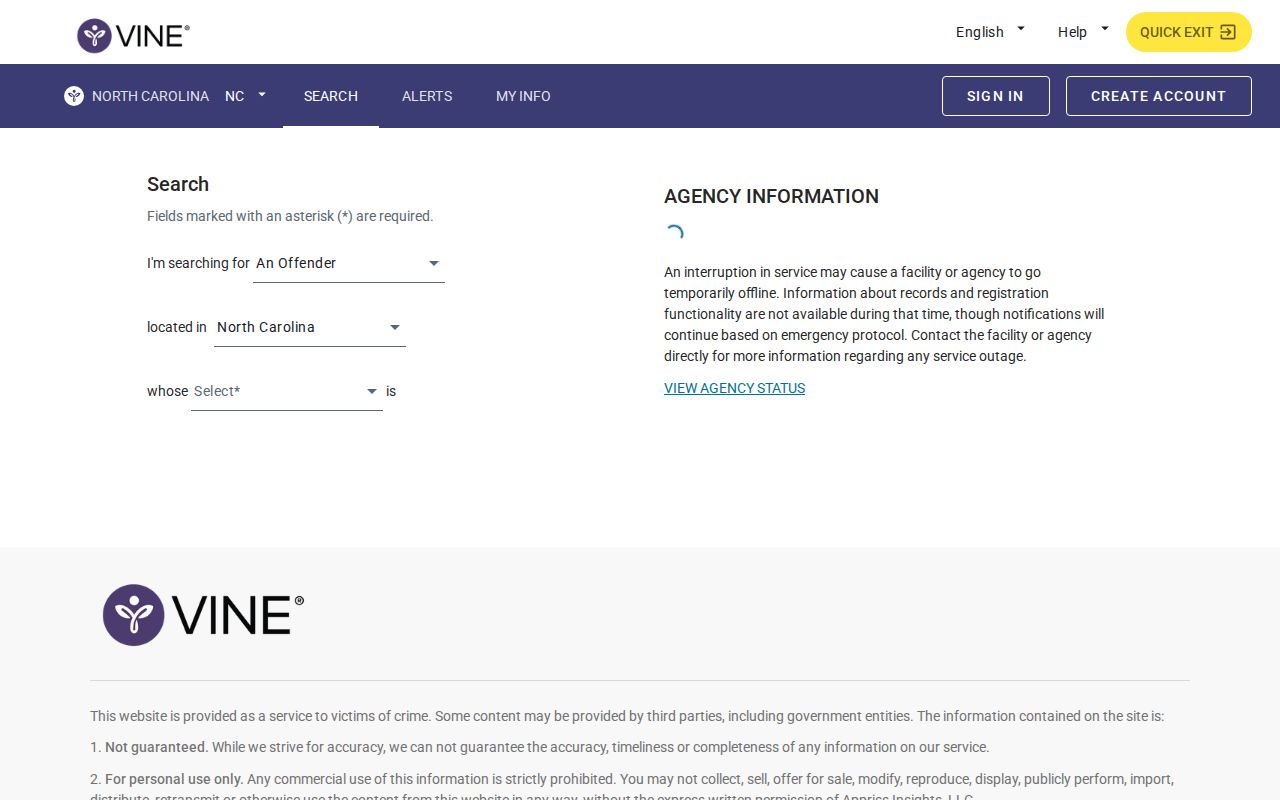
An alert can lag, and a transfer notice is not release. Record the alert time and confirm the movement in OPI or with NCDAC. A registrant may need to register again after a transfer to preserve notices.
Central Prison Community Status
Release from Central Prison can leave an active legal status in the community. Post-release supervision is built into many structured felony sentences. Parole applies chiefly to eligible older parole-law cases. Probation is a court status and is not proof that Central Prison made a release on the date being checked. OPI separates inmate and supervision fields so these outcomes can be read without guessing.
When an active supervision record appears, note the precise Probation/Parole Office. That field is more reliable than selecting a Wake office from a map because assignments can change. Community Supervision can route questions at 919-716-3100. The office can address current supervision, but the prison movement history remains the source for when confinement ended.
NC SAVAN can announce release or transfer events. These words are not interchangeable. A transfer alert should prompt a new location check and may require registration again. A release alert should prompt review of OPI and direct NCDAC confirmation. No alert can rule out a lag or another custodian.
For a complete public record, identify the OPUS number and approximate Central Prison dates. Ask NCDAC for existing public admission, movement, release, sentence, and supervision fields. Medical or diagnostic detail is generally confidential and is unnecessary to establish whether the person transferred or entered the community.
Hammond Jail Expansion Context
Wake County planning documents describe phased construction at the Hammond Road county jail and a later maximum-security expansion. That project concerns a Sheriff-operated jail, not Central Prison. It supplies local custody context only. It does not change Central Prison's capacity, movement rules, or release records, and no county construction milestone should be read as an NCDAC release-policy date. A transfer from Hammond Road to Central Prison is continued state custody, verified through OPI.
Final Central Prison Check
Before treating a Central Prison departure as release, align the last movement, destination, inmate status, and supervision status. If one field conflicts, record when OPI was checked and request the existing public movement entry from NCDAC. This short reconciliation is especially useful where a diagnostic or medical placement produced several location changes near the projected date.